

How To Repair Graphic Card No Display

Y'all've upgraded your graphics card to enhance your visual experience, but the results turned out to be the other fashion around.
Non merely don't you see clearer pictures, but you encounter no pictures at all.
The screen has completely been close off.
From your ability supply to the motherboard, brandish cable, or even the graphics carte itself, the root of your trouble may be your hardware.
However, information technology may also be just a software glitch and reversible by a few adjustment tricks.
Read on equally we explore how yous can cheque and troubleshoot both physical and logical causes of a dead screen.
New Graphics Card Black Screen (Causes, Fixes)
1. Bereft Power

Just like a poor diet can't supply your energy to activate during the day, an insufficient power supply fails to run your graphics card or other components.
On the other hand, different graphics cards crave different amounts of power to work smoothly.
Chances are your old PSU isn't powerful enough for the new hardware.
Bank check your menu's documentation for the minimum wattage required, and and so compare it with your PSU wattage.
If the numbers differ significantly, yous may demand to invest in a PSU with a higher maximum rating.
two. Wrong Connector Type

Even if the PSU supplies enough power, it cannot transmit it to your graphics carte du jour with the wrong connector blazon.
Graphics cards work with diverse cables such as 3 Pin, 4 Pin, six Pin, and 8 Pin.
Make certain you're not using the same one-time connector with the new component.
Additionally, some PSUs take more than ane power cable, and y'all may have forgotten to connect one.
Make sure this is non the case with y'all.
3. Loose Video Cable
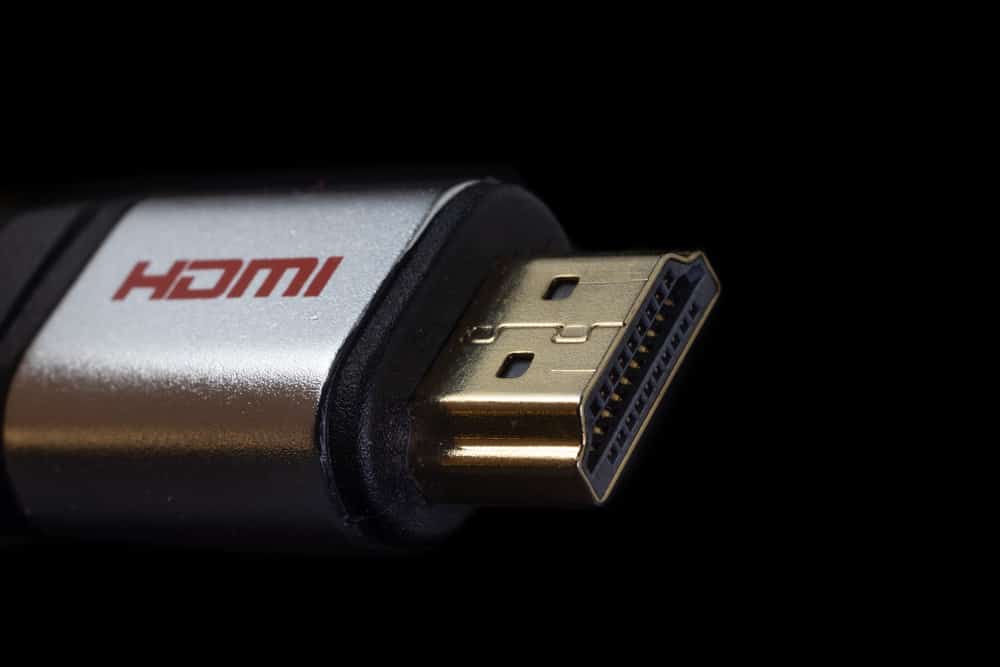
A loose video connector means no visual data can exist transmitted from your PC to the monitor.
Maybe you've failed to securely connect the HDMI, VGA, or AV cable to the monitor after installing the graphics carte and reassembling the case.
That made y'all think the new graphics menu stands guilty for the error.
Before delving into more than technical troubleshooting techniques, tighten all the cable screws in their places.
It's also worth unplugging and re-plugging the cablevision to see if the problem disappears.
Merely make sure to wait a few minutes before y'all reattach the cablevision.
4. Improper Graphics Bill of fare Placement

Sticking a graphics carte du jour into a tower isn't a simple process, and this increases the chance of incorrect placement.
Open up your case again to ensure the graphics card is deeply inserted into the PCI slots.
Is the PCI latch locking the card in identify?
Isn't the retentiveness clip broken?
Are all the cables fastened?
This video shows how to properly place the graphics card to avoid such problems:
Video:
5. Damaged Motherboard

This option particularly applies to those with insufficient PC building capabilities.
Replacing your delicate PC components requires some expertise, and if yous don't have the skills, you may harm your motherboard while installing a new graphics carte.
Touching the gold pins, dropping the boards, or declining to basis yourself are mutual causes of a motherboard failure.
To bank check if this has happened to you, reinstall the sometime graphics menu and see how it works.
If yous go on to see the blackness screen, yous'll need a new motherboard.
6. Motherboard Compatibility Issues

Have you done your homework before buying the new graphics card?
If not, yous may have bought an incompatible unit.
Motherboards come with different types of PCI slots, such every bit x4, x8, x16, and x32 models.
(Each value indicates the number of lines in that slot.)
Your graphics card'due south PCI slot configurations should match these numbers to be securely placed on your motherboard.
If it does, you can also place the card in another slot to ensure it's not broken.
7. Absent-minded Or Not Suitable Drivers

Computer drivers are intermediate utilities that help your hardware communicate with your Os.
Without them, your figurer wouldn't know how to perform your graphics bill of fare's functions.
Therefore, you have to install a uniform driver upon the placement of the new graphics card.
Most operating systems automatically install the associated driver, just sometimes you demand to do information technology manually.
Step one: Boot in Rubber Style

To view the drivers' setup page, first, you have to run your PC in Safe Fashion.
Information technology'southward a troubleshooting mode that boots your system with minimum settings and applications.
This volition likely let you recover the screen and tweak driver settings.
While the screen is black, y'all can kickoff Safe Fashion with three different methods:
Method A: The F8 central
- Press and hold the power button for a few seconds until you run across the light plough off, and then press it once again to switch on the PC.
- Earlier the OS loads, press F8 consecutively until you see a blue screen with a prompt.
- From there, select Troubleshoot > Advanced Options > Outset-upwards Settings > Restart.
- Now, printing F5 or 5 keys to select "Safe Mode with Networking."
- Await for the PC to load your Windows with essential apps.
Method B: Power Button
If the first method doesn't piece of work, yous can alternatively utilize the ability push to enter Safety Mode:
- Perform the first step of the above method, and immediately later you see the blackness screen, push the power button once over again to turn off the estimator.
- Repeat the off/on process three times, so the PC takes you to a new window.
- From there, click Run into advanced repair options > Troubleshoot > Advanced options.
- Select "Startup Settings for Safe Mode" and hit "Restart."
Method C:
- Turn off your estimator, disconnect it from the outlet, and open the chassis.
- Unmount your new graphics carte, keeping the necessary precautions in heed.
- With the case open, attach the monitor to the video output, and and so switch on the PC. Your computer should now boot normally because yous've taken out the primary culprit.
- Tap on the Start Menu and enter "msconfig" in the search field.
- Switch to the "Boot" tab in the new window.
- Nether the Boot Options header, bank check the "Safe Mode" checkbox and press "Apply."
- Turn off and unplug your PC.
- Remount the graphics card, and turn it on in one case once again to kicking in Safe Style.
Notation: If neither of the in a higher place methods works, chances are yous're facing a hardware issue, so you tin skip proceeding with the other steps.
Footstep 2: Install Graphics Cards Drivers

- Visit your graphics card manufacturer'southward website to download the latest driver for your device. (There might be a search tool in the Customer Service, Support, or Downloads section, letting yous search by your device'due south proper name, model, and number.) Once downloaded, zip the file, and memorize where you stored it so you tin access it after.
- Now, search "Control Console" in your Start Menu and open the resulting app.
- Open Device Managing director.
- Printing the "Action" push from the upper ribbon.
- Hit "Add Legacy Hardware" through the pop-up card and follow the on-screen prompts to add your new graphics card. (At some indicate, y'all may need to scan your computer to add the downloaded driver.)
Step 3: Update The Existing Driver

Sometimes, your computer updates the associated commuter equally soon equally you set new hardware, simply it gets the wrong type of software or one with bugs and errors.
In this case, you'll demand to update the driver manually.
- In the Device Manager, scroll down the list until you see the "Display Adaptors" option.
- Printing the picayune arrow abreast it to expand the list of installed video drivers.
- Select the existing video card driver and striking "Update Driver…"
- There'll be ii options: "Search automatically for updated driver" or "Browse my computer for driver software."
In the first method, make sure you have the files on your PC by doing step 1 of the previous method.
Note: After making the necessary changes to your drivers, don't forget to go to Start Bill of fare and type "msconfig" command to exit Rubber Mode.
8. Depression Screen Resolution

Sometimes, the drivers that go automatically installed with your new graphics card wreak havoc on your system settings.
Equally an instance, they can change your screen resolution without your permission.
If the gear up value is too depression, your monitor cannot back up it or evidence any pictures.
Since your display is dead, the best fashion to revert these settings is to reset your monitor to default settings.
Here's how:
- Printing the "Card" or "Settings" push button on your monitor to see if any messages appear on the screen.
- If so, utilise the adjustment buttons to find the "Factory Reset" "Default Settings" part.
- Ostend your option and go through the subsequent prompts.
If the monitor doesn't fifty-fifty prove on-screen prompts, run the Safe Fashion, and change the resolution through Windows Settings:
- Go to your Windows Offset menu and select Settings.
- Then, select Organisation and view the Advanced display settings.
- Gyre downwardly to see the "Screen Resolution" segment.
- Click the expandable arrow to broaden the driblet-down menu.
- From there, choose your preferred resolution.
Here'due south a quick guide on the best resolution for each display:
- 1280 10 1024 pixels for nineteen-inch monitors.
- 1600 10 1200 pixels for 20-inch monitors.
- 1680 x 1050 pixels for 22-inch monitors.
- 1900 x 1200 pixels for 24-inch monitors.
Note: if the practice solved the blackness screen hassle, you take to curlicue back your video drivers to prevent its recurrence.
How To Roll Back Drivers
By rolling back a driver, Windows disables the electric current driver version and restores a saved 1 from previous installations.
This tin probably wipe out the potential bugs with the new software.
- Go to your "Device Manager" through the Windows Search bar.
- Look for the "Display Adapters" category, expand it, and correct-click your Graphics carte du jour.
- Press "Properties," and then navigate to the Driver tab.
- Click "Roll Back Driver" and ostend.
- If the computer asks, mark a reason you're restoring an sometime driver.
- Allow the calculator do its job and restart your PC once finished.
nine. Wrong BIOS Settings
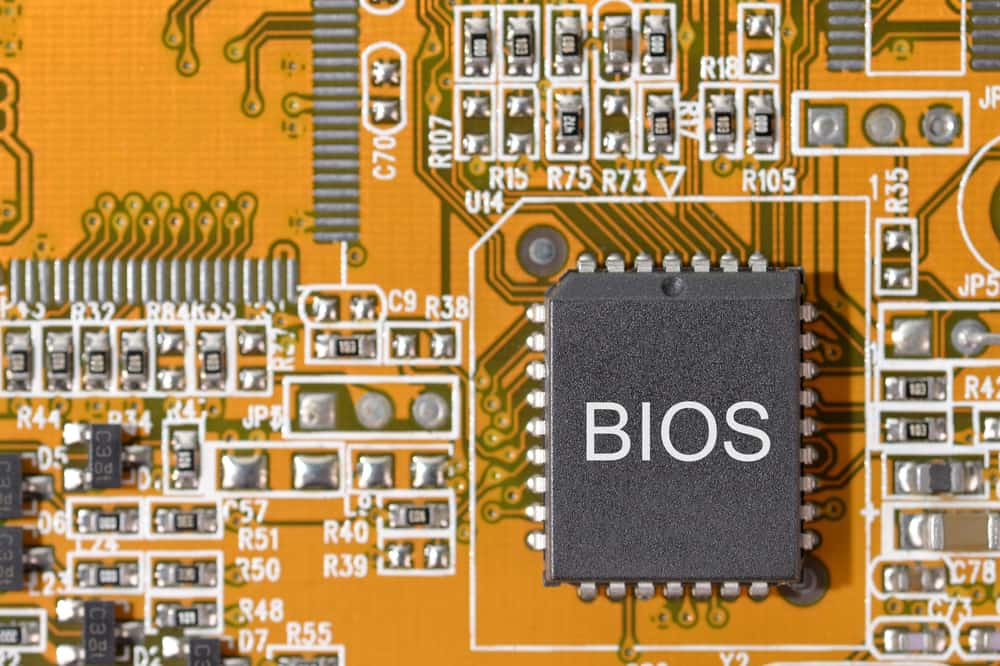
The BIOS is responsible for initializing all your figurer utilities, including the graphics bill of fare.
If it becomes corrupted, your graphics card cannot become activated, and it won't transmit visual information to your screen, making it completely black.
In this case, resetting your BIOS configurations can resolve the matter.
The easiest manner to recover BIOS default settings is using the iii-pin jumper:
- Press and hold the power button to turn off your computer.
- Flick the blackness switch at the back of the belfry to entirely block the electrical current and so unplug the ability cables.
- While taking the necessary precautions, open the computer chassis to access the motherboard.
- Wait for the CMOS reset button and press it.
- If your computer doesn't have such a switch, expect for a 3-pivot jumper somewhere close to the CMOS bombardment, and change information technology to the Clear position. (You lot can recognize information technology past labels such as CLEAR, Articulate CMOS, or CLR PWD/CMOS.)
- Swap the three-pin jumper from one position to another. (The jumper sits on two of the three pins, so change information technology from the 1-2 stance to the 2-3 position.)
- Wait well-nigh 5 minutes and put the jumper in the aforementioned old position.
- Reassemble, reconnect, and reactivate your PC.
A. Remove CMOS Battery
If yous tin't observe the BIOS jumper, removing the CMOS battery is another way to reset BIOS settings.
Just echo steps 1 through 3 of the above section and locate the battery.
In some laptop models, you can remove the CMOS battery by pulling a toggle at the back of your device: It comes out in a tray-like holder, just like an optical CD drive.
Desktop computers and other laptop models accept their CMOS battery inside the chassis, nether the PCI slots.
Refer to your Manufacturer'south Catalog or search your device'southward name and number to know where you tin find the unit.
B. Update BIOS
An outdated BIOS may not recognize or support new devices installed on your motherboard, including your graphics card.
That's because the new hardware probably wasn't released when your motherboard was installed.
Updating information technology may exist a practical fashion to resolve the blank screen effect after graphics card replacement.
Here'due south how you tin can do that:
- Use some other system to visit your motherboard manufacturer's support site and get the latest BIOS version.
- Extract the zipped folder into a regular one and transfer the files to a USB wink bulldoze.
- Go dorsum to the faulty PC and press and hold its ability button to plow it off.
- Switch the PC on and during the kicking-up procedure, utilize any of the post-obit keys to enter the BIOS interface: F1, F2, F10, Del, Esc
Note: The key may exist different depending on your computer make and model.
Lenovo and Dell, for example, work with F2 and F12, while Acer and ASUS accept F2 or Delete.
Also, press ESC or F10 if you're an HP user.
- Find a fashion to open your Flash Drive and upload the stored files into your BIOS. (You may discover an option in the "Boot," "Configurations," or "Advanced" menu, depending on your motherboard model.)
- Wait until the installation process ends and don't restart or plow off your PC during this procedure.
- Exit BIOS.
10. Old PC, New Component
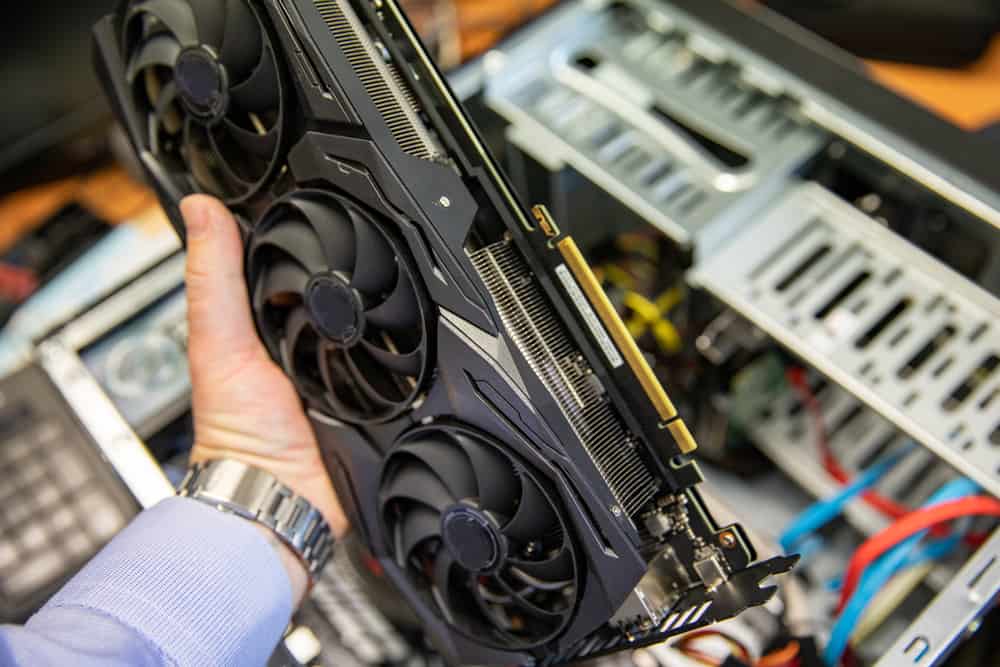
Some state-of-fine art graphics cards, such every bit AMD RX cards, are ill-adapted with legacy systems, especially those defective UEFI firmware.
Bank check your laptop specs to ensure this isn't causing yous problem.
11. Conflicting Windows Version

Another possibility is that your Os build version cannot support the newly installed component.
Therefore, you may too want to update your Windows as a last resort.
Launch your computer in Safe Mode and and then proceed with these steps:
- Head to the Start Card and tap on the gear icon to open up Windows Settings.
- Go to Update & Security, tap "Windows Update" from the left pane, and select the grey push button proverb, "Check for updates."
12. Faulty Graphics Card
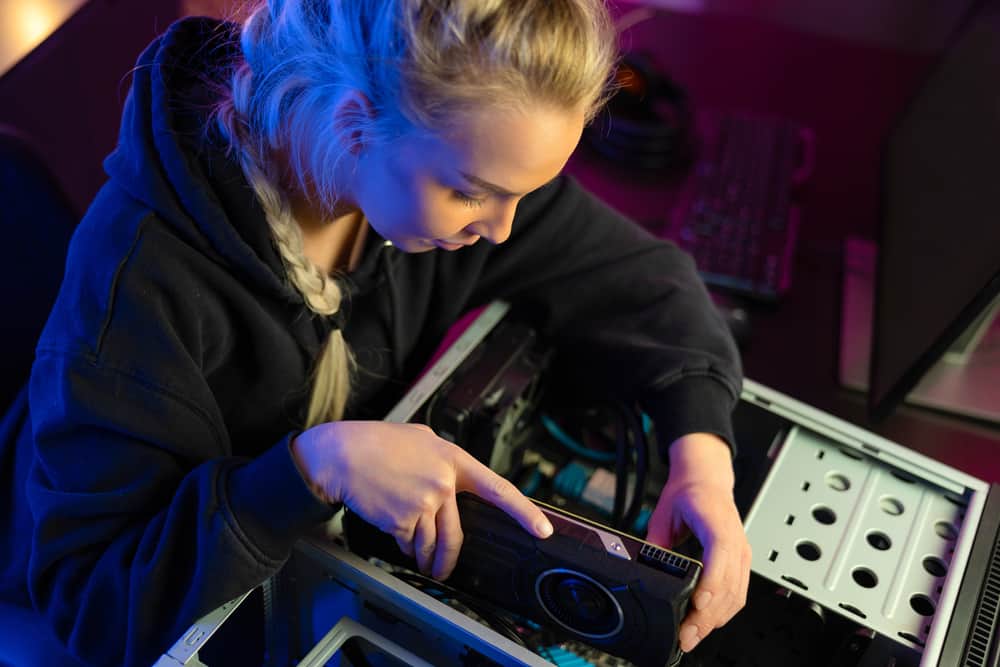
In the worst-case scenario, you have to supplant the newly bought graphics card.
Maybe yous've harmed it during the installation procedure, or perhaps, information technology got damaged in the delivery.
Just unmount it and install it on a friend's computer to discover out.
You can also check the GPU temperatures or listen to the fan racket to see if anything seems abnormal.
Inspect the graphics bill of fare for physical dents, deformations, or frying marks.
If your motherboard comes with an error code brandish, reading its number and consulting the manufacturer would also be another diagnostic workaround.
Source: https://www.thetechwire.com/new-graphics-card-black-screen/
0 Response to "How To Repair Graphic Card No Display"
Post a Comment